Changing the Paradigm for analyzing illicit supply and Drug trafficking in France

Santa Marta / Colombia

Santa Marta / Colombia

Santa Marta's port

Santa Marta's port

Along the humid backstreets near the port, life moves with an uneasy normality: trucks rumble past fruit stalls, fishermen unload their catch, and the sound of the sea mixes with the chatter of dockworkers. Yet just behind this everyday rhythm lies the quiet pulse of "la oficina." Hidden in an unremarkable building, it is where phone calls are taken behind closed doors, where envelopes change hands, and where the city's most powerful families coordinate the next shipment. Men arrive one by one, never together, stepping in from the heat to discuss routes, buyers, and which containers will be "protected" as they move toward the docks. Outside, children weave between motorcycles, unaware that deals made inside this room will send tonnes of cocaine toward Europe. "La oficina" sits in the shadows of the port - but its decisions shape everything that happens beyond the gates.

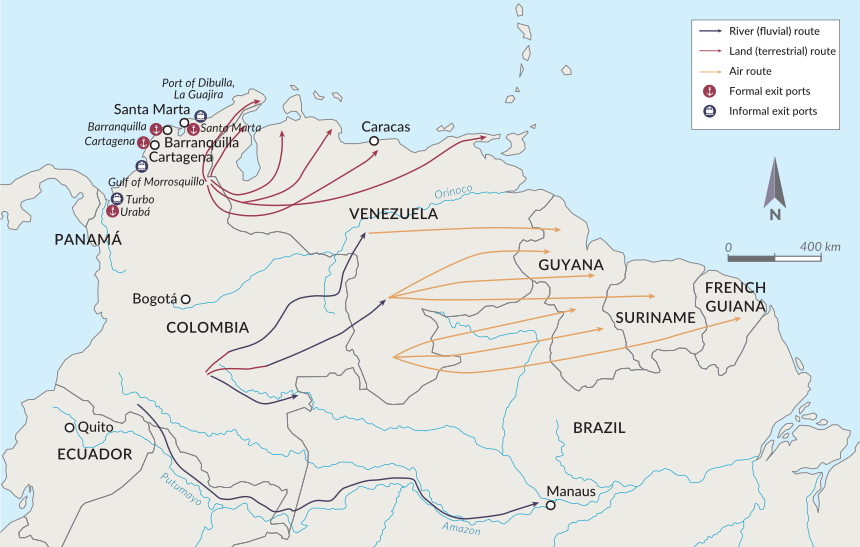
Santa Marta's Strategic Role map

Santa Marta's Strategic Role

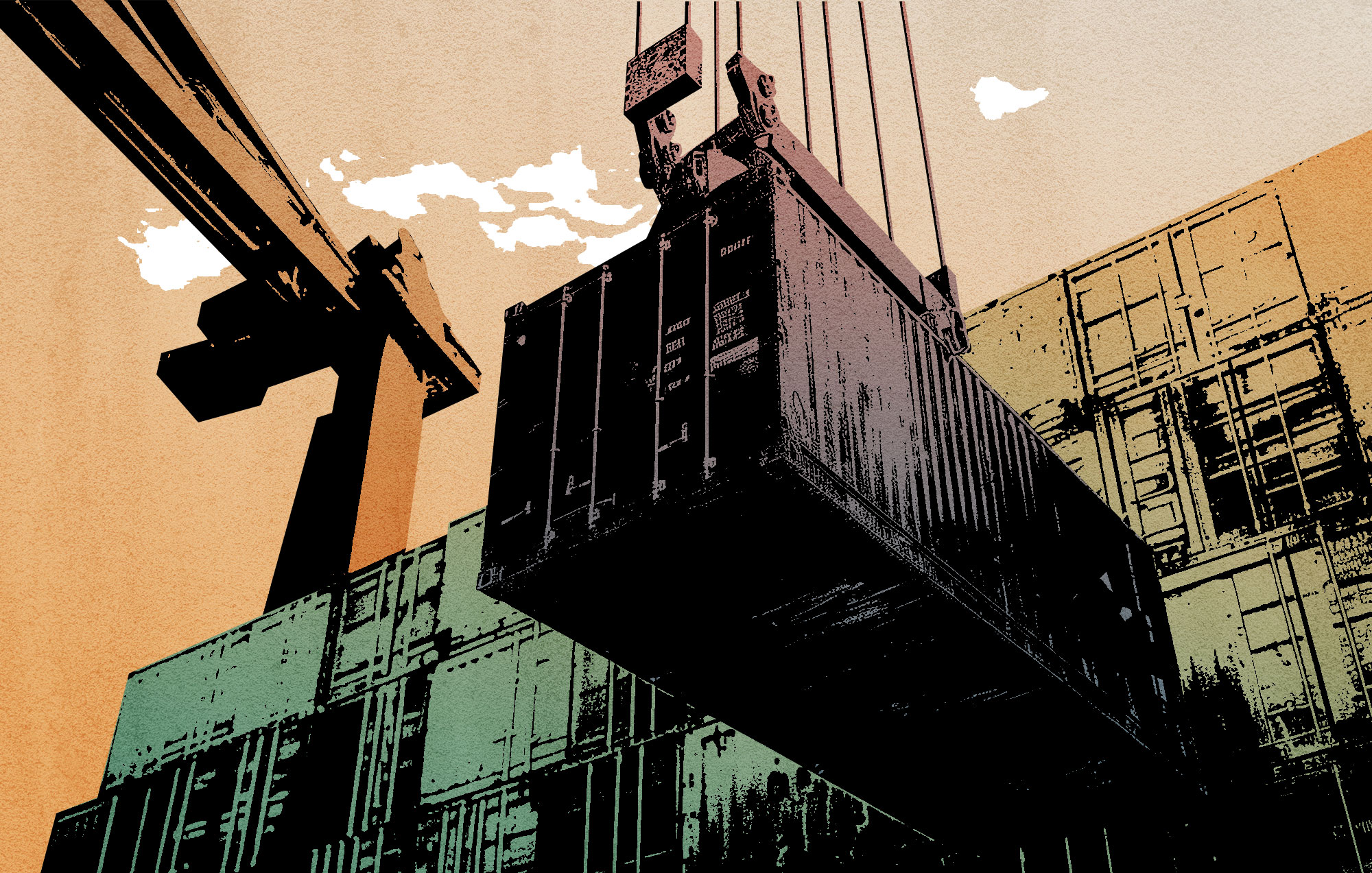
Stretching along one of the longest and most complex coastlines in the Caribbean, Colombia's maritime corridor moves enormous volumes of goods each year, creating the perfect cover for illicit flows. The Caribbean region alone handles 87 percent of the country's 180 million tonnes of cargo, with Santa Marta moving about 6.7 percent of the national total - small in relative terms, but still a major logistical hub with constant container and bulk traffic. Within this vast system of ships, trucks, warehouses and loading points, the logistics of cocaine move quietly alongside legal exports: containers already contaminated before reaching the port, rapid-processing perishable goods like bananas, and the coordination done through "la oficina" to decide which shipments are protected. These big numbers - thousands of containers, dozens of ports, and a coastline offering countless access points - shape an environment where the legal scale of maritime commerce becomes the very infrastructure that criminal networks exploit.

The Oficina visual

The Oficina

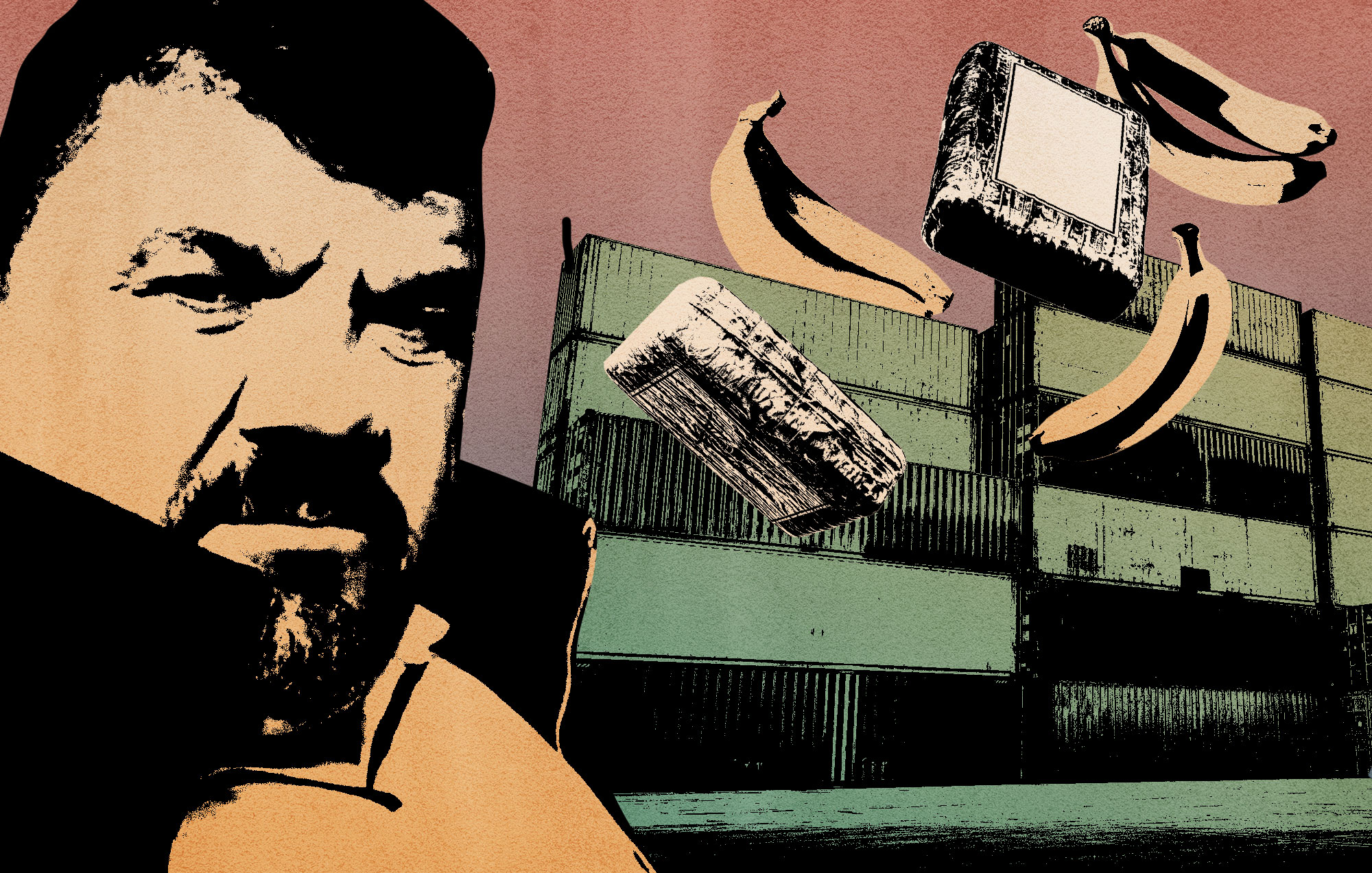
"La Oficina" operates as the quiet command centre of Santa Marta's cocaine economy - a discreet front where business, politics, and organised crime intersect. It is not a single gang but a coalition of powerful local families who have been tied to the drug trade since the 1970s, using their control over land, businesses, and municipal institutions to shape the flow of cocaine through the port. Inside this space, schedules are negotiated, containers assigned, routes coordinated, and alliances managed with armed groups and international partners, including Italian networks. Its influence extends far beyond its physical location: by controlling key nodes of logistics and information inside the port, "La Oficina" ensures that certain shipments pass unchecked, that local intermediaries fall in line, and that the city's political machinery remains favourable to their operations.

Flows & Modalities visual

Flows & Modalities

Traffickers exploit several maritime modalities, each adapted to the type of cargo and the vulnerabilities of the port system. Banana shipments, which move quickly due to their perishable nature, allow cocaine to be hidden among boxes that receive minimal delays or deep inspection. Coal exports, shipped in bulk carriers rather than containers, offer opportunities to bury cocaine within massive loads that are practically impossible to inspect thoroughly. Standard containers remain a central method: they can be contaminated before reaching the port or manipulated with false seals to hide cocaine among legitimate goods. Divers using the parasite technique attach waterproof bundles directly to a ship's hull, relying on stealth and the limited ability of authorities to inspect underwater structures. Finally, go-fast launches operate outside the formal port system altogether, using speed, agility, and coastal geography to move cocaine to rendezvous points or directly to larger vessels offshore. Each modality reflects a different way of exploiting scale, blind spots, or logistical pressure points in the maritime trade system.

Violence & Competition

Barranquilla, Cartagena, and Santa Marta's "La Oficina" each play distinct roles in the Caribbean trafficking landscape, creating overlapping interests that fuel competition and conflict. Cartagena is the country's most efficient and highly connected port, moving the largest volume of containers and attracting sophisticated contamination schemes. Barranquilla, by contrast, depends heavily on control of access roads and vehicle-based contamination, which has sparked violent disputes around the port and river routes. Santa Marta's dynamic is different: "La Oficina" acts as a local power centre that coordinates shipments by leveraging political influence, family networks, and control over coastal properties. While Cartagena and Barranquilla are shaped by port infrastructure and logistics, Santa Marta is shaped by a criminal-political coalition. These competing models - industrial efficiency, territorial control, and political capture - generate friction among groups seeking dominance over the region's most profitable maritime corridors.

Transnational Ties + closing frames

Political protection in this corridor emerges from long-standing relationships between local elites, port actors, and criminal networks, creating a system where trafficking is shielded rather than merely tolerated. In places like Santa Marta, influential families tied to "La Oficina" use their positions in municipal and departmental institutions to secure key posts, shape port operations, and protect collaborators. In Cartagena and Barranquilla, corruption extends into customs, port security, and even access roads, allowing contaminated cargo to pass with minimal risk. These ties blur the line between public authority and private criminal interest: favours, campaign financing, and informal agreements ensure that certain groups receive warnings, permissions, or blind spots when moving cocaine. The result is a resilient protection structure that adapts to enforcement pressures and keeps the maritime economy of cocaine functioning despite periodic arrests or seizures.

From a once ordinary banana port, Santa Marta has evolved into a discreet but decisive node in the Caribbean cocaine economy. At the centre of this transformation stands La Oficina, the coalition of entrenched families and power brokers who turned local influence into logistical control. By coordinating shipments, securing political protection, and exploiting the port's strategic position, La Oficina helped shift the city from an agricultural export hub into a gateway for international cocaine flows. In this quiet coastal landscape, the facade of normal trade masks a sophisticated system that now links Santa Marta to global trafficking routes - transforming it into a hidden epicentre of the region's illicit economy.

These digital tools have been developed with contributions from the GI-TOC Observatory of Violence and Resilience in Haiti (HT-Obs), the GI-TOC Observatory of Organized Crime in Europe (EUR-Obs), and the Observatory of Illicit Economies in the Amazon Basin (AMA-Obs). They are part of our broader analytical work on transatlantic drug trafficking and aim to share key research findings with a wider audience of stakeholders, including policymakers, law enforcement officials and civil society. This project has been funded, in whole or in part, by MILDECA, the French government's Interministerial Mission for Combating Drugs and Addictive Behaviours, under the authority of the Prime Minister.

Global InitiativeGouvernement Francais et MILDECA