
Changing the Paradigm for analyzing illicit supply and Drug trafficking in France
Martinica and Saint Lucia


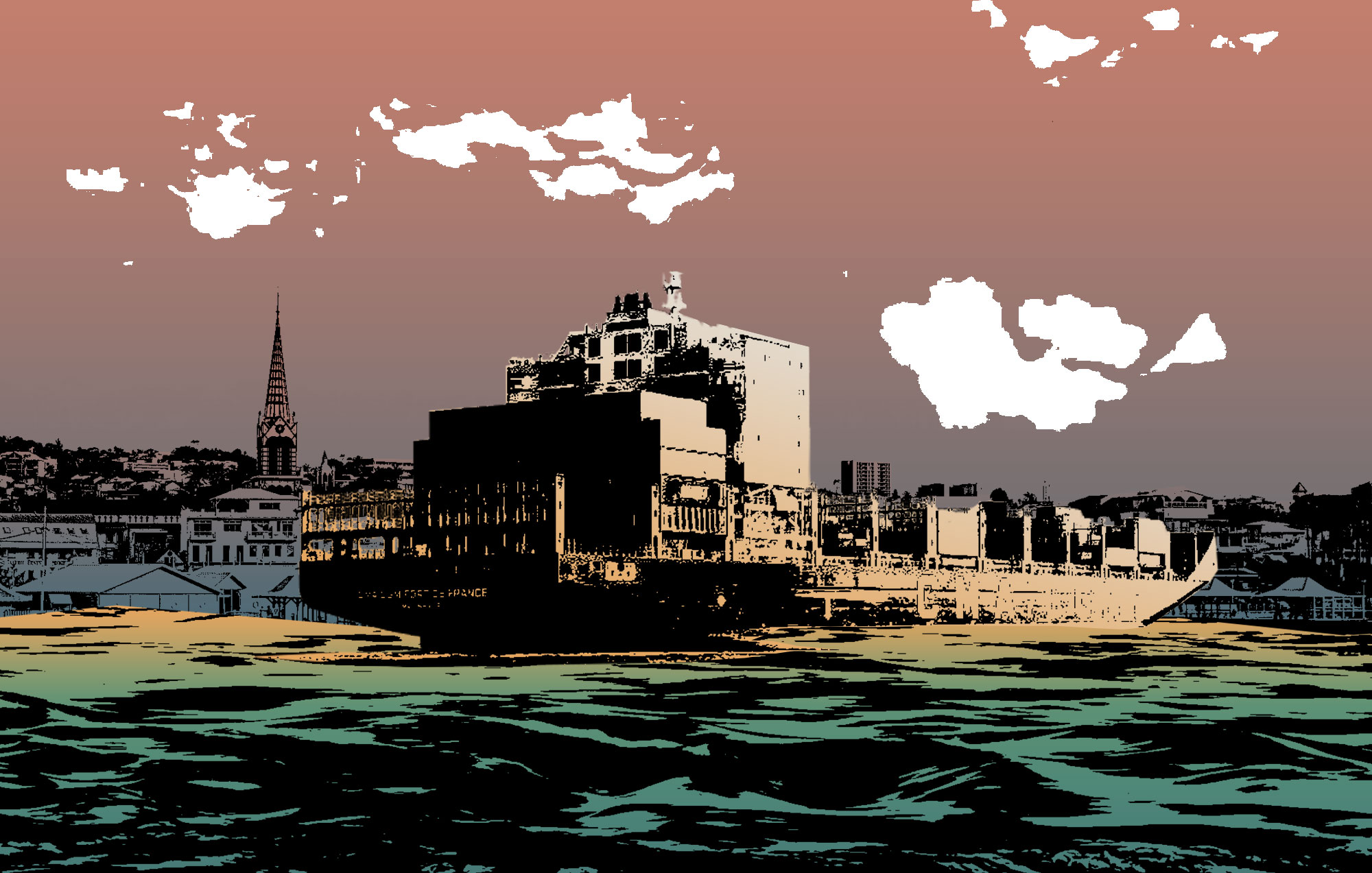
Fort de France opening
In Fort-de-France, the modernized container terminal of the Grand Port Maritime has become one of the critical nodes of cocaine trafficking in the Lesser Antilles. Despite major investments to extend the quays, deepen the basin, and expand storage capacity, this strategic infrastructure remains riddled with vulnerabilities. Described by local sources as "a cheese full of holes," where ineffective cameras, opaque identities, and internal complicities intersect, the port now serves as a key entry point for criminal networks that exploit both legitimate commercial flows and the corruption of dockers and logistics personnel.
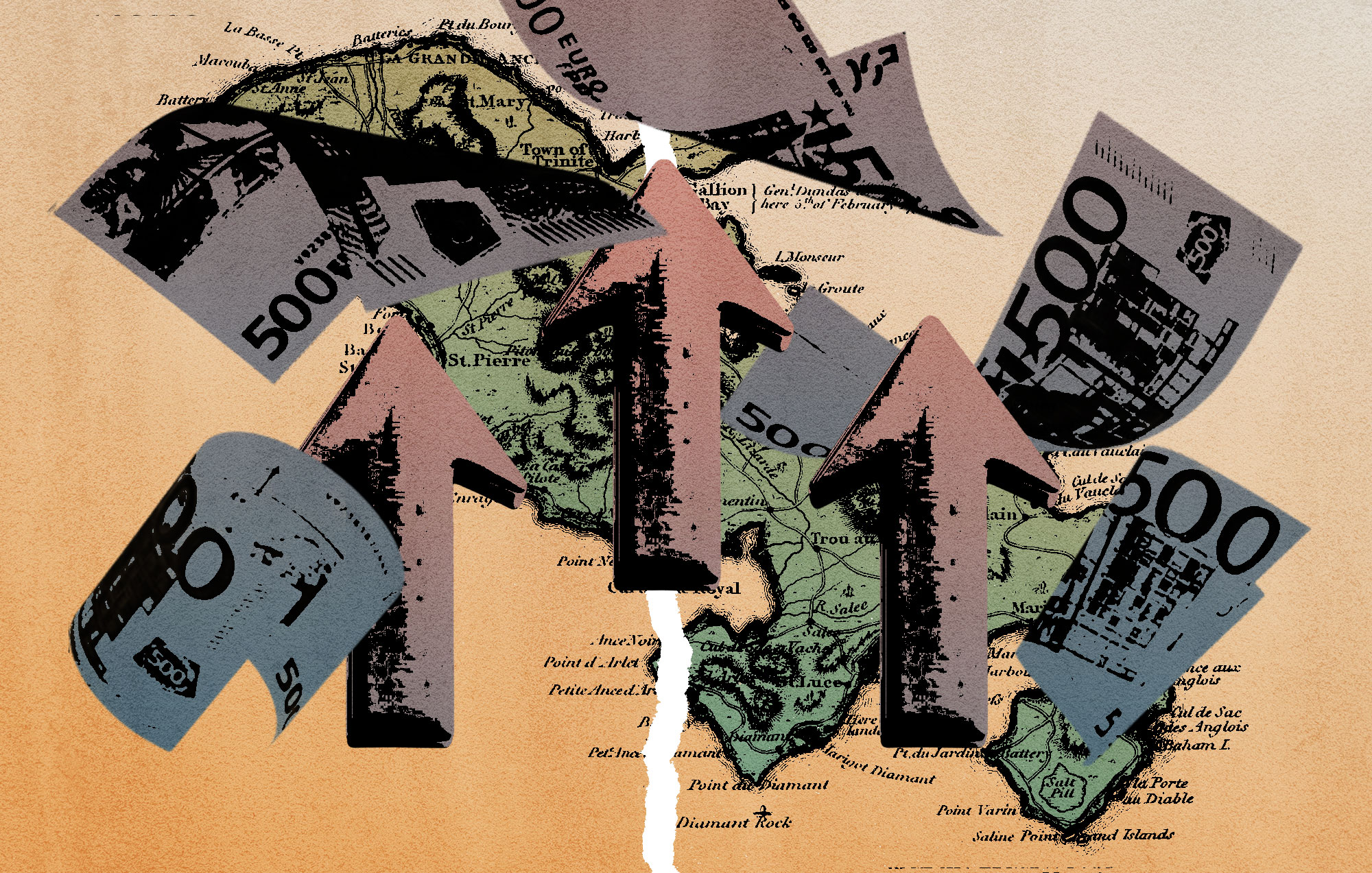
Socio-Economic Context
Martinique faces a deep socio-economic crisis driven by high living costs, persistent poverty, and limited opportunities for its younger generations. Basic goods are significantly more expensive than in mainland France, and more than a quarter of the population lives below the poverty line. Unemployment remains high, especially among young people, where rates far exceed those in the metropole. These structural pressures have fuelled steady emigration, with tens of thousands of residents leaving the island over the past decade and a half. As young people depart and birth rates remain low, Martinique's population continues to shrink and age, eroding the local labour force and undermining long-term economic resilience.
In October 2024, Martinique was shaken by a wave of social unrest driven by the rising cost of living. Protests quickly escalated into widespread roadblocks that paralysed the island, with groups of demonstrators cutting off major arteries and disrupting daily life for days. The tension spilled over into episodes of looting and clashes with security forces, revealing a deep well of frustration and highlighting how economic hardship, social inequality, and declining trust in public institutions have created an increasingly volatile environment.

Local Criminal Networks: Professionalization
A decade ago, the cocaine trade in Martinique was symbolised by a single dominant figure: Kevin Doure, whose large-scale operations embodied a more centralised and recognisable criminal structure. His arrest and conviction marked a turning point, after which the landscape splintered into a constellation of smaller, shifting actors. Today, instead of one identifiable kingpin, the trade is driven by multiple silhouettes operating in parallel - loosely connected, opportunistic, and harder to track. This transition from a central figure to a dispersed ecosystem reflects both the professionalisation of local networks and the increasing fluidity, adaptability, and opacity of the market.
Flows & Transport Vectors
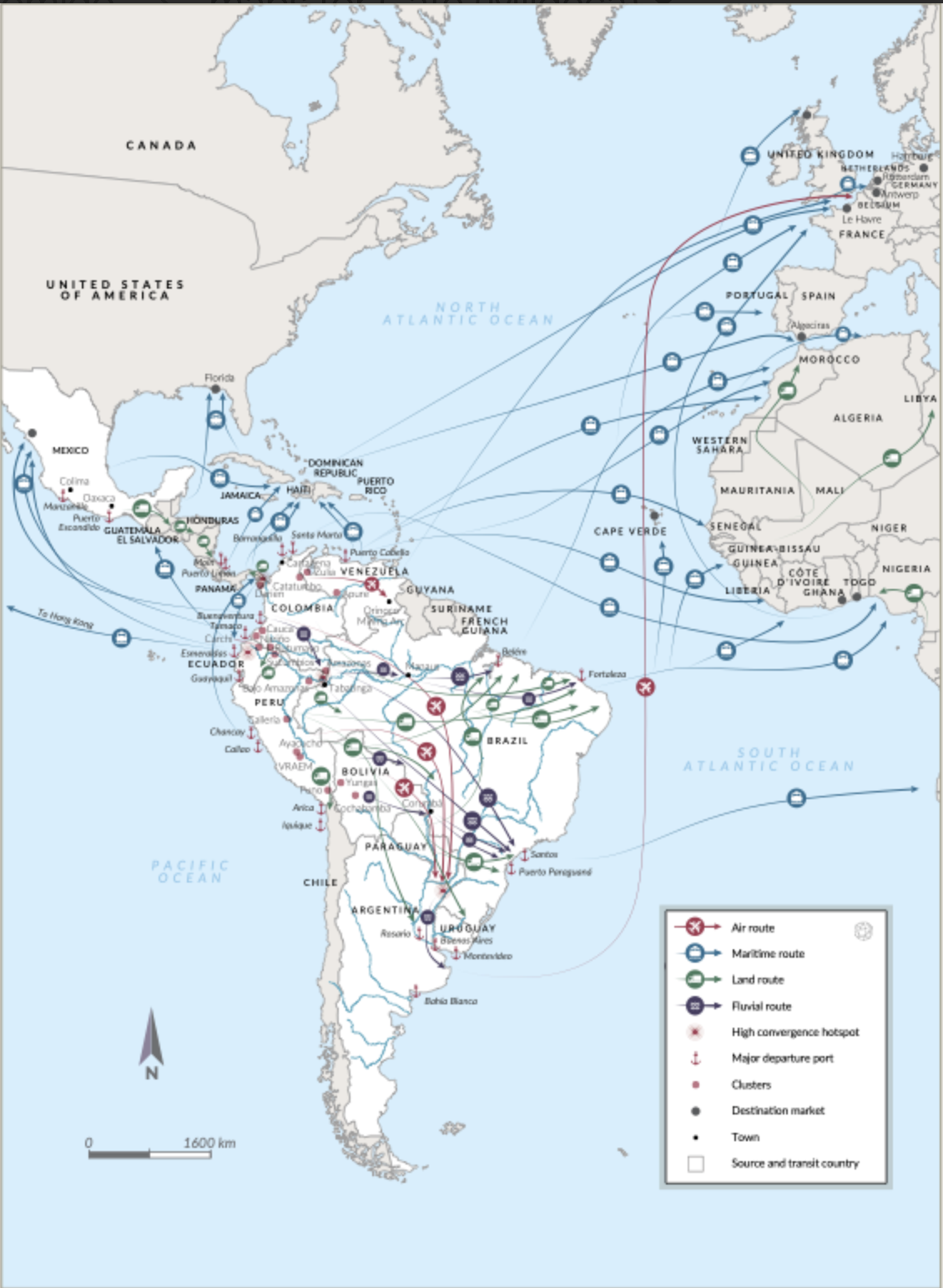
Cocaine circulates through the Lesser Antilles via a wide range of transport vectors that together form a highly adaptable system. At sea, traditional yoles, go-fast boats, fishing vessels and sailing yachts move loads from South America or neighbouring islands, using isolated coves and night landings to avoid detection. Increasingly, traffickers also rely on commercial shipping routes, contaminating containers or inserting small parcels into legitimate cargo flows. In the air, regional flights, postal freight, express parcels and human couriers provide additional channels, each offering different levels of concealment and risk. Rather than replacing one another, these vectors overlap and accumulate, allowing criminal networks to diversify their options, disperse risk, and respond quickly to shifts in law-enforcement pressure.
Ruissellement (Trickle-Down Effect)
The cocaine economy in Martinique follows a pyramidal structure that begins with top-level organisers who negotiate supply, manage logistics, and coordinate shipments. Below them operate trusted employees responsible for transport, storage, or container contamination, often compensated partly in cocaine rather than cash. This payment system fuels the emergence of micro-networks, as those receiving product redistribute it through their own small circles to recover profit. At the base of the pyramid, the drug is broken down into street-level quantities and diffused through loosely connected sellers who operate with high turnover and minimal hierarchy. The result is a broad, decentralised chain where each layer transforms bulk imports into fragmented retail markets.
Violence & Firearms
Arms trafficking in the Lesser Antilles has intensified alongside the expansion of the regional drug trade, with most weapons entering through maritime routes, postal flows, and improvised channels such as the blue-barrel system from the United States. Handguns like Glock and Taurus models circulate widely, while converted pistols and assault rifles have become increasingly common, sometimes used as payment in cocaine transactions. The impact is stark: in places such as Saint Lucia, firearm homicide rates have reached some of the highest levels in the world, and islands like Martinique and Guadeloupe have seen a sharp rise in shootings driven by fragmented networks seeking territorial advantage. The easy availability of weapons, combined with limited controls and porous borders, has turned small disputes into lethal confrontations and amplified the violence surrounding illicit markets.
Fragmentation & Opportunism
The criminal landscape in the French Antilles has shifted from hierarchical structures to a fluid ecosystem driven by fragmentation and opportunism. Since the fall of major figures like Kevin Doure, no dominant leadership has re-emerged; instead, a constellation of small, agile actors competes - and collaborates when convenient - in an ever-shifting marketplace. Rivalries flare and dissolve overnight, with groups stealing from each other one day and partnering the next. Without a central authority, the cocaine trade has become more volatile, adaptive, and unpredictable, fueled by freelancers and mid-level operators able to plug into transnational routes. This fragmentation has not weakened the market; it has made it harder to detect, more flexible, and more resilient to law-enforcement pressure.
Corruption & Saturation
Traffickers in the French Antilles rely heavily on corruption within port logistics, where dockers and other key personnel are strategically co-opted to facilitate cocaine movements. Ports are described by investigators as "gruyere" structures - full of holes, with opaque identities, ineffective cameras, and information that rarely circulates. In this environment, corruptible dockers become critical assets: securing access to just one can earn a criminal up to EUR 100,000, according to sources. Tactics vary from bribing security staff to simply "look right while the drugs pass left," to exploiting administrative workers and private logistics companies. These insider-enabled breaches allow traffickers to contaminate containers, bypass controls, and move shipments with minimal risk, turning port infrastructure into a central vulnerability in the region's fight against organized crime.

Prison of Ducos: The Shadow Hub
The Prison of Ducos has evolved into a shadow hub of Caribbean criminal activity - a place where networks do not just survive incarceration, they expand. Plagued by chronic loss of control, the facility sees drugs, weapons, and illicit phones circulate with ease, enabling detainees to maintain command over operations outside. Within its walls, local traffickers from Martinique, Guadeloupe, and Saint-Martin interact directly with Venezuelan, Colombian, and Dominican actors, exchanging contacts, techniques, and opportunities. Rather than breaking criminal structures, Ducos inadvertently connects them, functioning as a hidden crossroads where new alliances are forged and future operations are quietly engineered.
Regional Linkages (St. Lucia focus)
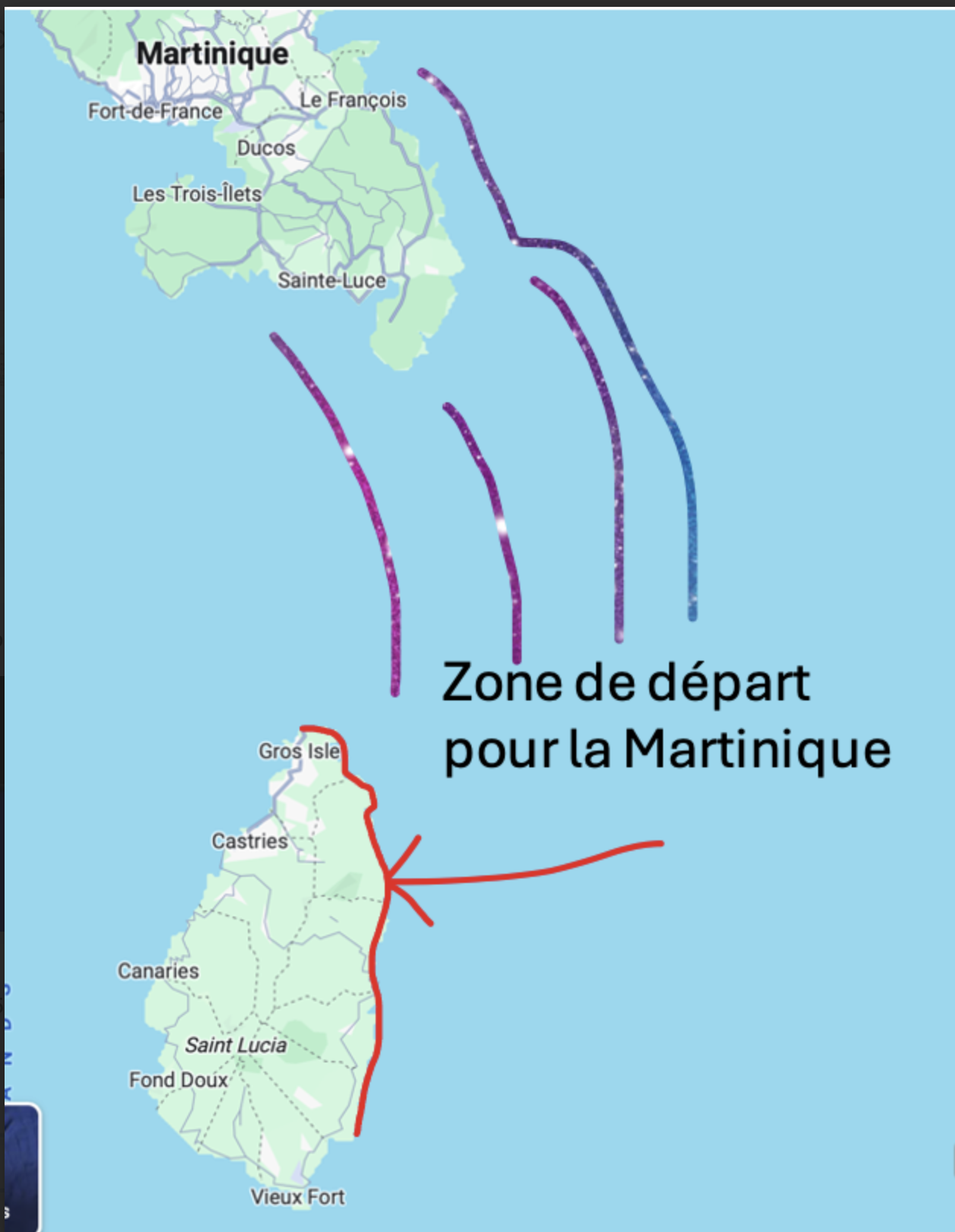
Saint Lucia has become a key relay point on the cocaine routes threading through the eastern Caribbean, acting as a "catchment basin" that collects shipments from Colombia, Venezuela, and Suriname before funnelling them toward Martinique, Guadeloupe, or Europe. Its geographic position between major islands, combined with limited law-enforcement resources, makes it an ideal rebound zone for traffickers. According to multiple security sources, Saint Lucia now functions as an intermediate hub where cocaine is consolidated, repackaged, and quietly pushed northward - a discreet but indispensable link in the regional trafficking chain.
An emerging hub
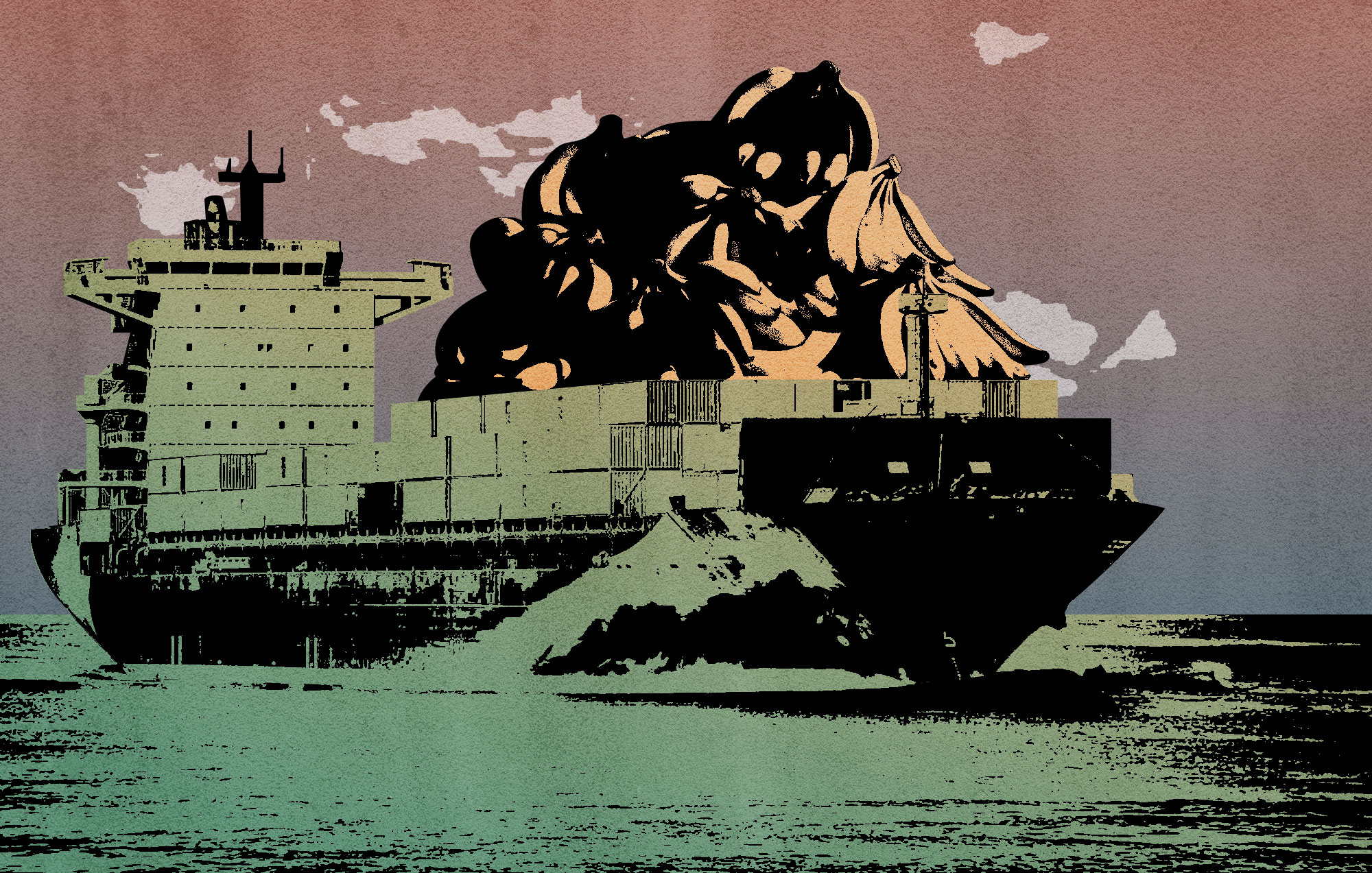
Martinique has become more than a stopover - it is now a true hub where cocaine, firearms, and people move in and out, reshaping criminal dynamics across the Caribbean and feeding supply chains that reach Europe. Its ports and airports serve as logistical platforms for storage, re-export, and redistribution, while local networks have evolved from simple intermediaries into full-fledged organizers with international partnerships. This transformation has positioned the island at the center of regional trafficking routes, making it both a crossroads and a pressure point in the wider narco-economy.