
Changing the paradigm for analyzing illicit supply and drug trafficking in France
Martinique and Saint Lucia

Martinique has emerged as a key hub where cocaine, firearms and people circulate, reshaping criminal dynamics across the Caribbean and feeding supply chains that extend to Europe. The island lies at the centre of regional trafficking routes, making it both a crossroads and a pressure point in the wider drugs economy.
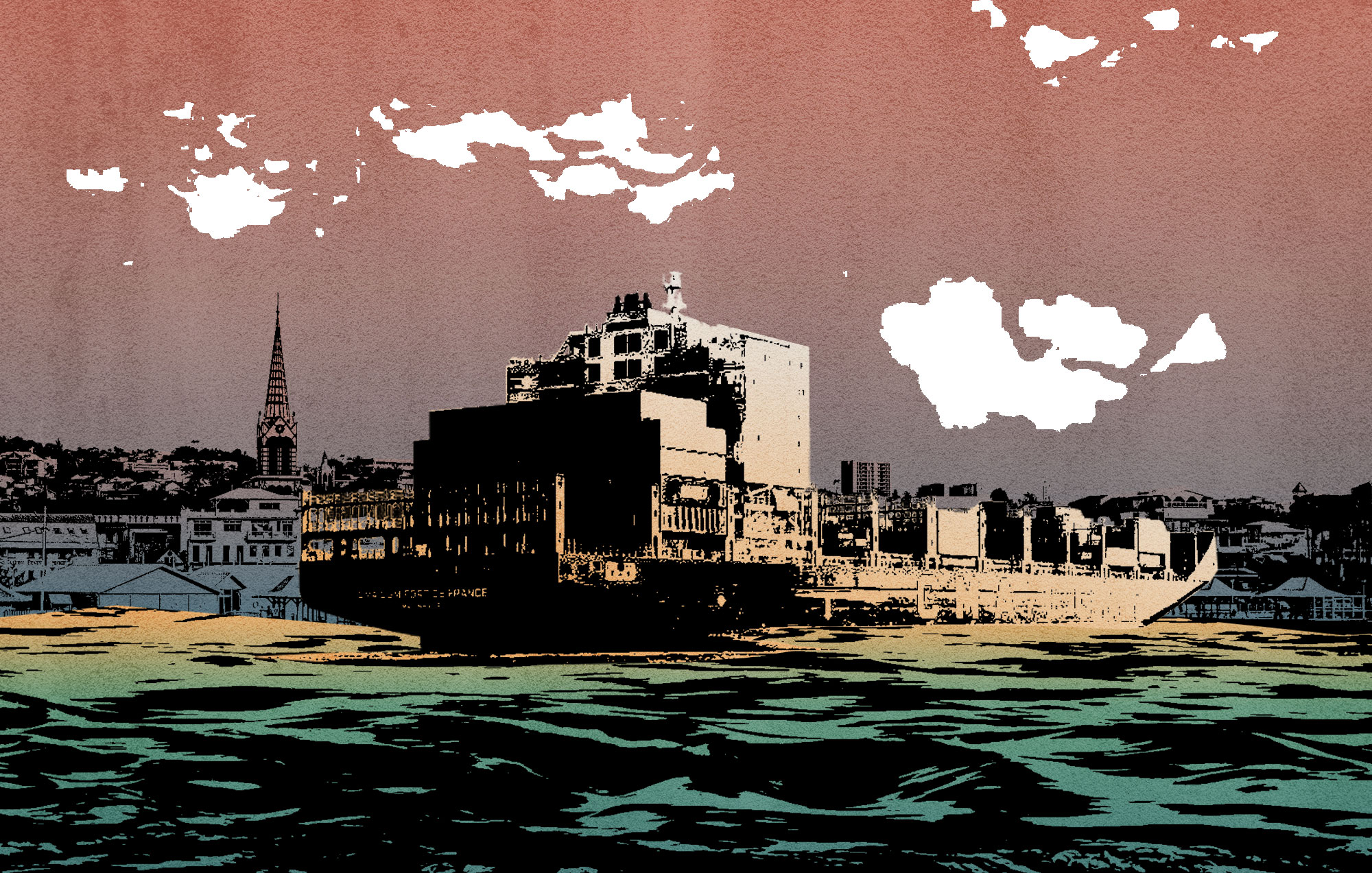
Fort-de-France as a critical node
In Fort-de-France, the modernized container terminal of the Grand Port Maritime has become a key node in cocaine trafficking across the Lesser Antilles. Despite significant investment in upgrading its infrastructure, the port remains highly vulnerable to exploitation. Local magistrates describe it as ‘a cheese full of holes’, where weak surveillance and insider complicity create openings for criminal networks. These gaps allow traffickers to exploit legitimate trade flows to move cocaine through the port.

A web of local criminal networks
A decade ago, the cocaine trade in Martinique was dominated by a figure, Kevin Doure, whose operations reflected a centralized structure. Following his arrest and conviction, however, the landscape splintered into a constellation of smaller actors. Today, the trade is driven by loosely connected groups operating in parallel. This shift points to the professionalization of local networks and a more fluid, adaptive market.
The cocaine economy now resembles a loose hierarchy. At the top are organizers, who negotiate supply and coordinate logistics. Below them are trusted operators handling transport, storage and container contamination, often paid partly in cocaine. This in-kind payment fuels the spread of small, independent networks, as recipients resell the product through their own circles. At street level, distribution is fragmented, with high turnover and minimal structure. The result is a decentralized system that breaks bulk shipments into dispersed retail markets.
Routes and flows
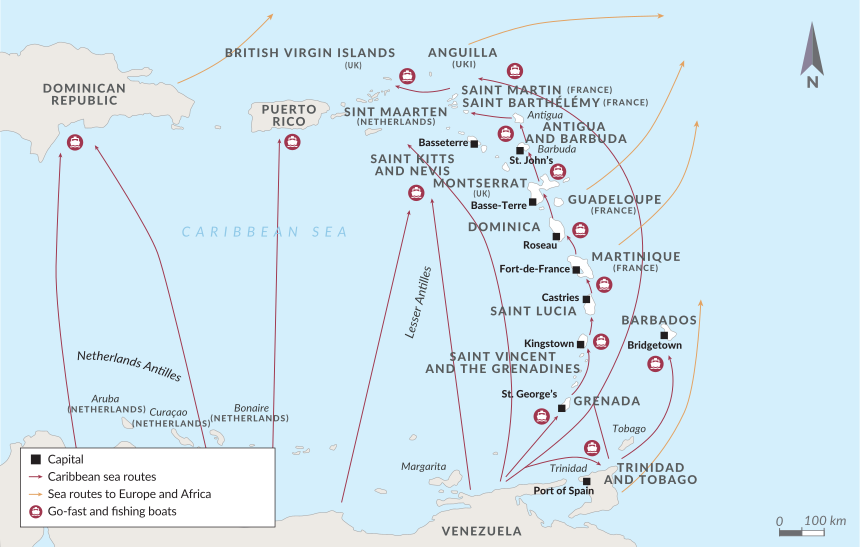
Cocaine moves through the Lesser Antilles along a wide variety of routes, forming a highly adaptable system. At sea, go-fast boats, fishing vessels and sailing yachts carry shipments from South America and neighbouring islands, using remote coves and night landings to avoid detection. Commercial shipping routes are also widely exploited, with cocaine inserted into containers or concealed within legitimate cargo. In the air, regional flights, postal freight, express parcels and couriers provide additional channels. Rather than replacing one another, these methods overlap, allowing traffickers to respond quickly to shifts in law-enforcement pressure.
Corruption
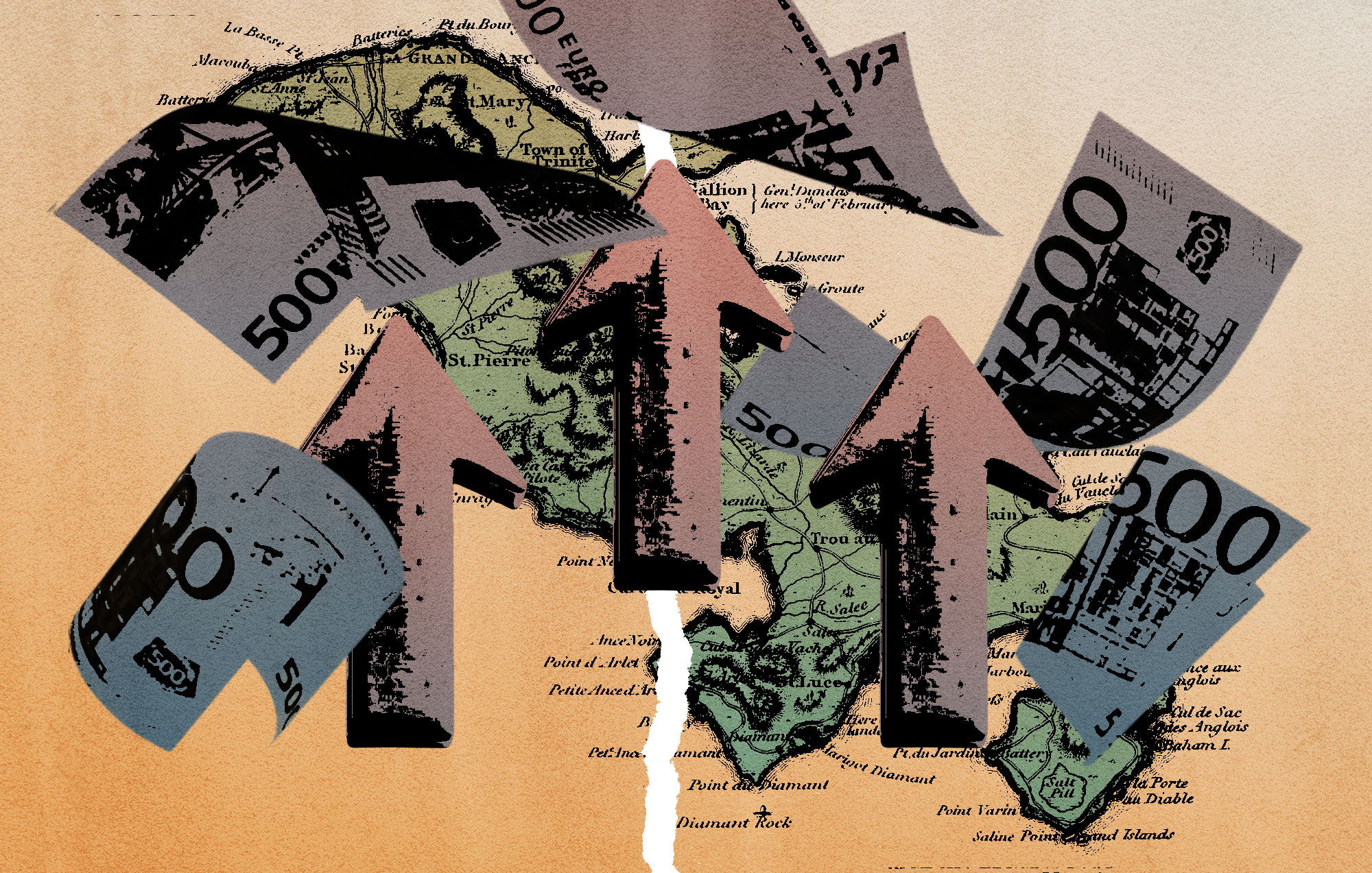
Trafficking in the French Antilles relies heavily on corruption within port logistics, where key personnel are co-opted to facilitate the movement of cocaine. In this context, access to even a single compromised docker can be highly lucrative, reportedly generating up to €100 000 for criminal actors. Methods range from bribing security staff to overlook irregularities to exploiting administrative staff and private logistics firms. These insider-enabled breaches allow traffickers to contaminate containers, bypass controls and move shipments with limited risk.

Ducos prison – a shadow hub
The Ducos prison near Fort-de-France has emerged as a shadow hub of Caribbean criminal activity, where incarcerated networks continue to operate – and in some cases expand. Weak institutional control within the facility allows drugs, weapons and illicit mobile phones to circulate, enabling detainees to coordinate outside operations. Inside, traffickers from Martinique, Guadeloupe and Saint Martin interact with counterparts from Venezuela, Colombia and the Dominican Republic, facilitating the exchange of contacts, methods and opportunities.
Regional linkages
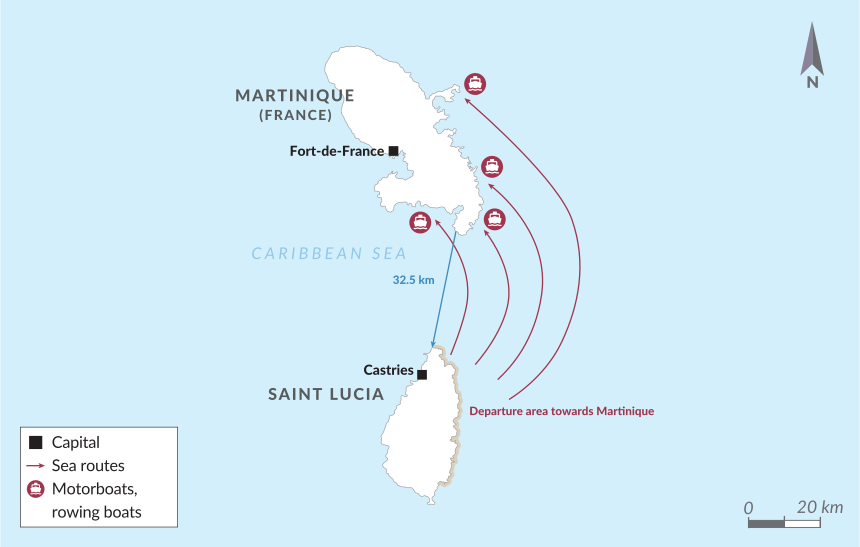
Saint Lucia has become a key relay point for cocaine trafficking routes across the eastern Caribbean, acting as a catchment hub for shipments from Colombia, Venezuela and Suriname, which then move on to Martinique, Guadeloupe or Europe. Its position between major islands, combined with limited enforcement capacity, makes it an ideal staging ground. Cocaine shipments are consolidated and repackaged there before being transported northwards, establishing the island as a discreet but essential link in the regional trafficking chain.